Small Pet Select Hay Guide: Choosing the Right Cut for Your Pet
Choosing the right pet select hay comes down to understanding your pet's precise dental wear needs, gastrointestinal fiber requirements, and texture tolerance.

What this report covers
- Models assessed
- 6
- Our score range
- 8.4 – 9.6/10
- Last updated
- 25 Sep 2026
Figures above are read from the product listings for the models named below. Scores are out of 10, based on listed specifications and buyer feedback.
As Amazon Associates, we earn from qualifying purchases. This means we may receive a small commission at no extra cost to you if you click through and make a purchase.
Choosing the right pet select hay comes down to understanding your pet’s precise dental wear needs, gastrointestinal fiber requirements, and texture tolerance. Small herbivores such as rabbits, guinea pigs, and chinchillas rely on high-fiber grass forage as the foundation of their daily nutrition. However, a single grass harvest does not fit every animal. Coarser textures excel at grinding constantly growing molars, while softer foliage tempts reluctant feeders or older pets experiencing oral discomfort. Choosing the proper forage requires balancing nutritional fiber density against the practical palatability of the hay in your feeding station.
The Small Pet Select product line is organized systematically by harvest timing, botanical species, and supplemental purpose. Their core offerings follow traditional hay harvesting cycles, moving from coarse, stem-heavy first-cut Timothy hay to a balanced second cutting, down to an ultra-soft, leaf-dense third cutting. Beyond single-species Timothy options, the catalog introduces alternative grasses like orchard grass for allergic households, alongside enriched botanical blends designed for foraging stimulation. Evaluating which pet select hay to buy requires matching these distinct harvest profiles to your pet’s current health status and eating behavior.
Criteria matrix What each model in this report is credited with
Rows are the criteria that come up in the pros and cons listed for this lineup. A check means the criterion is named in this report’s write-up of that model; a dash means it is not. Criteria that apply to every model, or to only one, are left out because they separate nothing.
| Criterion | 2nd Cutting Perfect 9.6/10 | 1st Cutting Timothy 8.4/10 | Orchard Grass Hay 9.6/10 | 3rd Cutting Super 8.4/10 | Gourmet Hay Treat 8.6/10 | Premium Ultra Soft 9.2/10 |
|---|---|---|---|---|---|---|
| Timothy | Named | Named | Named | Not named | Not named | Named |
| Dental | Named | Named | Named | Named | Not named | Not named |
| Stems | Named | Named | Named | Named | Not named | Not named |
| Daily | Named | Not named | Named | Named | Named | Not named |
| Tender | Not named | Named | Not named | Named | Not named | Named |
| Seed heads | Not named | Named | Not named | Named | Not named | Not named |
| Hand-packed | Named | Not named | Named | Not named | Not named | Not named |
| Grinding | Not named | Named | Not named | Named | Not named | Not named |
| Criteria named | 5 / 8 | 6 / 8 | 5 / 8 | 6 / 8 | 1 / 8 | 2 / 8 |
Built from the wording of this report, not from a bench test. A dash is not a fault: it only means the write-up does not mention that point for that model. Scores next to each model are out of 10, based on listed specifications and buyer feedback.
Small Pet Select Small Pet Hays Lineup at a Glance
Best for: Senior animals with chronic chewing difficulties
Pros
- Ultra-leafy tender consistency
- Easy on sensitive gums
- Convenient small-batch bag
Cons
- Small 15-ounce package volume
Best for: Caregivers seeking daily habitat foraging enrichment
Pros
- Aromatic herbal assortment
- Stimulates investigative foraging
- High-value meal topper
Cons
- Supplemental treat use only

Best for: Picky eaters and convalescent small animals
Pros
- Extremely soft leaf texture
- Enticing natural aroma
- Gentle on sensitive mouths
Cons
- Minimal tooth grinding wear

Best for: Households managing human Timothy grass pollen allergies
Pros
- Soft broad grass blades
- Hypoallergenic Timothy alternative
- High palatability
Cons
- Lower stem abrasion
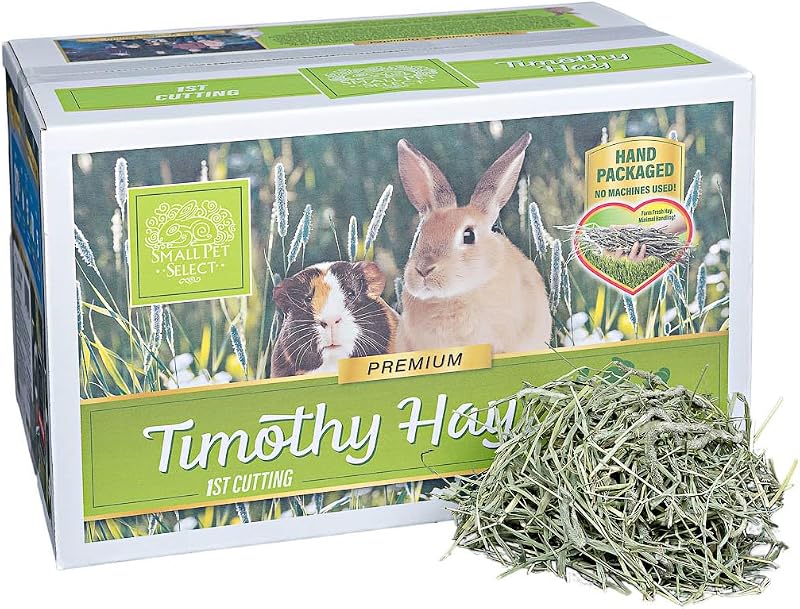
Best for: Pets requiring aggressive dental wear and fiber
Pros
- Coarse fibrous stems
- Abundant mature seed heads
- Promotes strong intestinal transit
Cons
- Can be rejected by picky pets

Best for: Healthy adult small herbivores needing balanced nutrition
Pros
- Balanced stem and leaf mix
- Hand-packed uncompressed carton
- Reliable daily dental wear
Cons
- May lack stems for spurs
| Product Name | Cut or Variety | Primary Nutritional Focus | Container Style |
|---|---|---|---|
| Small Pet Select 2nd Cutting Perfect | Second Cut Timothy | Balanced dental wear and digestive health | Corrugated carton |
| Small Pet Select 1st Cutting Timothy | First Cut Timothy | Maximum coarse fiber and rapid dental wear | Corrugated carton |
| Small Pet Select Orchard Grass Hay | Single-species Orchard Grass | Allergen-friendly alternative and diet variety | Corrugated carton |
| Small Pet Select 3rd Cutting Super | Third Cut Timothy | Gentle mouthfeel for picky or recovering pets | Corrugated carton |
| Small Pet Select Gourmet Hay Treat | Mixed hay with herbs and flowers | Foraging stimulation and appetite enhancement | Bag packaging |
| Small Pet Select Premium Ultra Soft | Specialty Ultra-Soft Timothy | Elderly pets and compromised dentition | Bag packaging |
The Models in Detail
Small Pet Select 2nd Cutting Perfect
Often considered the industry benchmark for standard adult maintenance, Small Pet Select 2nd Cutting Perfect delivers an even distribution of flexible stems, broad green leaves, and developing seed heads. This cut represents the middle stage of the agricultural growth cycle, providing enough coarse structure to maintain proper wear on small pet molars while retaining enough leafiness to keep daily meals appealing. The product is hand-packed in small batches without compression packaging, protecting the botanical structures so stems and leaves stay whole rather than fragmenting into unusable dust.
Small pet owners seeking a dependable daily forage will find this small pet select 2nd cutting fits the standard requirements of healthy adult rabbits, guinea pigs, and chinchillas. Its high-fiber, low-protein balance supports regular cecal fermentation without contributing excess calories that cause unwanted weight gain. The uncompressed flakes arrive packed inside a durable corrugated carton, which doubles as an easy-to-store container that keeps the forage aerated and shielded from light exposure.
Because it offers a moderate profile across all physical attributes, it serves as the baseline against which all other cuts are measured. If your pet experiences severe dental spurs requiring aggressive mechanical abrasion, you may need to step up to a coarser harvest. However, for baseline wellness and effortless maintenance, this versatile small pet select timothy hay remains the primary staple for most household setups.
Small Pet Select 1st Cutting Timothy
For small animals that require maximum mechanical abrasion to manage rapidly growing teeth, Small Pet Select 1st Cutting Timothy provides the firmest physical structure in the brand’s lineup. This early-season agricultural harvest is characterized by thick, fibrous stems, an abundance of mature seed heads, and a lower ratio of tender foliage. The heightened cellulose content demands sustained chewing effort, actively grinding down premolars and molars while providing high amounts of roughage to stimulate sluggish digestive tracts.
The manufacturer packages this small pet select 1st cutting in a sturdy corrugated box without utilizing hydraulic compression, preserving the physical firmness of the long stalk structures. The listing specifies that this formulation is geared directly toward promoting healthy digestion and dental management in adult small animals. Animals that consume high volumes of leafy greens or pellets at the expense of necessary stem fiber benefit significantly from the mandatory chewing action this harvest requires.
Because the stalks in this cut are notably rigid, some selective or timid eaters may ignore the thick stems in favor of softer alternatives. Handling stem-heavy forage around your pet’s enclosure can leave scattered fragments, which clean up quickly using a shark handheld vacuum for pet hair to keep surrounding carpets and floorboards tidy. If your pet shows resistance to dense stalks, the balanced second cut becomes the necessary compromise.
Small Pet Select Orchard Grass Hay
While Timothy hay is the conventional standard in small herbivore care, human allergies can turn daily feeding routines into a chronic respiratory challenge. Small Pet Select Orchard Grass Hay provides a functionally complete nutritional alternative featuring broad, supple blades of grass with minimal stem density and virtually no prominent seed heads. This botanical shift provides an alternative for caregivers sensitive to Timothy pollen while delivering the requisite fiber, protein, and fat levels necessary for normal gastrointestinal transit.
For small pets, this small pet select orchard grass offers a pliable mouthfeel and a naturally sweet aroma that works exceptionally well as a rotational forage. Picky herbivores that routinely leave Timothy stems uneaten will frequently consume orchard grass completely, minimizing feeding station waste. Hand-packed in standard corrugated cartons, the grass maintains its broad leaf integrity from harvest through delivery, preventing the brittle shattering often found in commercially compressed bags.
From an abrasive standpoint, orchard grass does not provide the same degree of aggressive dental wear as a first-cut or second-cut Timothy grass due to its lower stem proportion. Caregivers using orchard grass as a primary diet should monitor tooth wear closely. It serves best as a permanent Timothy replacement for allergy sufferers or as an enriching component blended into daily feeding boxes.
Small Pet Select 3rd Cutting Super
Securing a high-fiber forage for a convalescent or hyper-selective animal can be an immense challenge, which is where Small Pet Select 3rd Cutting Super fits into the brand lineup. Harvested late in the growing season during late summer or early fall, third-cut hay is notoriously difficult to cure and pack properly. The resulting forage contains almost exclusively tender leaves, featuring an exceptionally low stem-to-leaf ratio and negligible seed heads, creating a velvety consistency that delicate mouths can chew without effort.
This small pet select 3rd cutting is formulated specifically for adult pets recovering from medical procedures, animals suffering from oral ulcers, or picky eaters that systematically reject coarser hays. Because it contains higher natural protein and fat percentages relative to early-season harvests, it provides easily accessible nutrition to keep cecal flora active when a pet’s daily intake drops. The harvest is packed loose in cardboard containers to ensure delicate leaves remain uncrushed.
The primary concession with third-cut hay lies in dental maintenance. Because coarse, silica-laden stems are largely absent, chewing this cut does not deliver significant grinding action against molar roots. It should be viewed as an essential therapeutic resource or an introductory step to transition picky pets toward firmer forage, rather than a permanent tooth-wearing solution for healthy young adults.
Small Pet Select Gourmet Hay Treat
Foraging enrichment is vital for captive small herbivores, and Small Pet Select Gourmet Hay Treat was formulated to break the monotony of single-grass feeding stations. This specialized two-pound blend mixes various hay types with an extensive botanical assortment, including lavender, raspberry leaf, strawberry leaf, rose petals, plantain, dandelion leaf, chamomile, oat tops, lemon verbena, freeze-dried berries, and pine cone accents. The diverse aromatic profile encourages natural investigative foraging behaviors and entices pets with declining appetites.
Supplied in a bagged format, this small pet select gourmet hay serves as a high-value diet topper or an occasional treat rather than a solitary base diet. Placing small handfuls inside digging boxes or distributing it throughout daily hay racks keeps animals mentally stimulated and moving throughout the day. It is appropriate for all life stages, providing safe botanical variety without relying on processed grains or synthetic binders.
Routine room cleaning is an inevitable part of offering botanical blends, as dried petals and crushed leaves easily track outside enclosure pens. Keeping a reliable shark vacuum pet hair heavy duty on hand makes short work of stray forage and fine herbal debris around the habitat base. Because this gourmet blend contains concentrated botanicals and dried fruits, it should be measured conservatively to avoid unbalancing daily macronutrient ratios.
Small Pet Select Premium Ultra Soft
Elderly animals, pets diagnosed with severe malocclusion, and convalescent small pets frequently require a gentler textural experience than conventional second-cut cartons can deliver. The Small Pet Select Premium Ultra Soft provides an exceptionally leafy, stem-free Timothy profile packed into a compact 15-ounce bag. The listing highlights this product as the softest, greenest Timothy selection available from the brand, targeted specifically at animals that experience pain or mechanical limitations when chewing tougher vegetation.
Unlike larger bulk cartons designed for multi-month maintenance, this 15-ounce offering functions as an immediate dietary intervention. If an older rabbit or senior guinea pig begins avoiding the hay feeder, introducing this tender small pet select hay ensures essential gut motility continues without aggravating tender gums or misaligned teeth. It holds an all-life-stages designation and is guaranteed free of potato derivatives, focusing entirely on clean, unadulterated botanical fiber.
Because of its compact bag size, this model does not represent a long-term bulk supply for multi-pet households, serving instead as a targeted wellness solution. While it solves immediate palatability crises, pets with fully intact dentition will ultimately require the mechanical firmness found in earlier harvest cuttings to prevent tooth overgrowth.
Matching a Model to Your Setup
- Healthy adult rabbits, guinea pigs, and chinchillas: Choose Small Pet Select 2nd Cutting Perfect to provide an optimal balance of rough stem fiber for tooth wear and tender leaves for reliable daily consumption.
- Animals with a history of dental overgrowth or sluggish motility: Select Small Pet Select 1st Cutting Timothy for its dense, fibrous stalk content and high concentration of mature flower heads that force active chewing.
- Caregivers suffering from Timothy grass pollen allergies: Rely on Small Pet Select Orchard Grass Hay to supply essential dietary fiber without triggering household respiratory sensitivities.
- Pets recovering from veterinary care or displaying picky eating habits: Deploy Small Pet Select 3rd Cutting Super for its delicate, leaf-heavy mouthfeel that stimulates immediate appetite without chewing resistance.
- Multi-pet enclosures requiring foraging stimulation: Incorporate Small Pet Select Gourmet Hay Treat as a scattered feeding topper to encourage natural foraging behaviors and sensory engagement.
- Senior herbivores experiencing chewing pain: Use Small Pet Select Premium Ultra Soft to keep fragile digestive systems running smoothly without irritating sensitive gums or misaligned dental structures.
Before You Buy
When selecting between these various hay profiles, be aware that natural agricultural products undergo seasonal shifts that the manufacturer’s listings do not quantitatively catalog. Factors such as harvest moisture percentages, precise stem-to-leaf ratios, and crude fiber assay variations will fluctuate across individual farming lots. While Small Pet Select hand-packs its cartons to inspect for overall quality and eliminates mechanical compression to protect stalk integrity, slight color changes from bright emerald to pale green can occur depending on harvest timing and storage temperature.
Additionally, the packaging specifications vary across the catalog based on volume and intended usage. The core agricultural cuts arrive loose in unlined, heavy-duty corrugated cartons designed to facilitate air exchange and prevent moisture condensation, whereas the specialized botanical treats and ultra-soft formulations come sealed in smaller bags. Make certain you have an appropriate climate-controlled storage location away from direct sunlight and humidity to preserve nutritional value and prevent mold growth over extended feeding periods.
FAQ
How does first cutting hay differ from second cutting hay?
First cutting hay is harvested early in the season, resulting in a higher proportion of thick, fibrous stems, mature flower heads, and lower leaf volume. It offers maximum mechanical abrasion to grind down ever-growing teeth. Second cutting hay represents a later harvest featuring a balanced blend of softer stems, abundant leaves, and fewer seed heads, making it the most balanced daily staple for adult pets.
Can orchard grass completely replace Timothy hay in a pet’s diet?
Yes, orchard grass is a nutritionally appropriate grass forage that provides the necessary dietary fiber, protein, and fat levels required by small herbivores. It serves as an ideal full-time replacement for households where family members suffer from Timothy pollen allergies, though owners should monitor tooth wear due to its softer stem profile.
Why is third cutting Timothy hay relatively rare?
Third cutting Timothy is harvested late in the agricultural season during late summer or early fall when weather conditions become unpredictable. Because it consists of delicate, leaf-dense foliage with minimal stem development, curing and harvesting it without moisture spoilage is difficult, making it less commonly produced than standard first or second cuttings.
How should bulk hay packaged in corrugated cartons be stored?
Cartons should be stored in a dry, temperature-controlled environment elevated off concrete floors. The uncompressed, breathable box format prevents condensation, but the forage must remain shielded from dampness, high humidity, and direct sunlight to avoid nutritional degradation and mold development.
Is gourmet botanical hay suitable as a primary daily feed?
Gourmet botanical hay is formulated as a supplemental treat and foraging topper rather than a complete primary diet. Because it incorporates dried flowers, herbs, and fruit pieces alongside mixed grasses, it should be offered in moderation to complement, rather than replace, standard unflavored grass hay.


