Ubiquiti PoE Hardware Compared: Finding the Right Setup for Your Network
Designing a dependable local network requires making clear decisions about power distribution and physical connectivity across your hardware.

What this report covers
- Models assessed
- 6
- Our score range
- 7.8 – 9.8/10
- Last updated
- 25 Sep 2026
Figures above are read from the product listings for the models named below. Scores are out of 10, based on listed specifications and buyer feedback.
As Amazon Associates, we earn from qualifying purchases. This means we may receive a small commission at no extra cost to you if you click through and make a purchase.
Designing a dependable local network requires making clear decisions about power distribution and physical connectivity across your hardware. Network administrators frequently face the choice between deploying a dedicated ubiquiti networks poe switch that consolidates power and switching into one enclosure, or integrating standalone injectors to power individual endpoints on demand. While a switch with integrated power simplifies cabling in large racks, standalone adapters give you the flexibility to direct precise wattage and bandwidth to high-draw devices without placing unnecessary electrical load on your core infrastructure. Understanding how these hardware approaches function is key to preventing both data bottlenecks and unexpected power limits.
The hardware selection from Ubiquiti Networks addresses these challenges through a tiered approach spanning specialized power injectors, enterprise wireless access points, compact edge switches, and high-density rack units. Whether you need an entry-level ubiquiti poe adapter for an isolated workstation, an advanced multi-gigabit power supply for high-speed wireless, or a multi-port switch to expand wired capacity, the catalog provides distinct options. Performing an objective ubiquiti poe switch comparison helps pinpoint which ubiquiti poe to buy based on port speeds, enclosure construction, and the specific ubiquiti poe power delivery demands of each terminal.
Criteria matrix What each model in this report is credited with
Rows are the criteria that come up in the pros and cons listed for this lineup. A check means the criterion is named in this report’s write-up of that model; a dash means it is not. Criteria that apply to every model, or to only one, are left out because they separate nothing.
| Criterion | Networks PoE Injector 7.8/10 | Networks UniFi 7 Pro 8.8/10 | Networks PoE 48V 0.5A 9.6/10 | Networks 2.5GbE 30W PoE+ 8.2/10 | Compact 5-Port Gigabit Switch 9.4/10 | Networks UniFi USW-24 Switch 9.8/10 |
|---|---|---|---|---|---|---|
| Operating | Named | Named | Not named | Named | Named | Named |
| Hardware | Named | Named | Named | Named | Not named | Not named |
| Chassis | Named | Named | Not named | Named | Not named | Named |
| Dedicated 1G SFP | Not named | Named | Not named | Not named | Not named | Named |
| Gigabit Ethernet | Not named | Named | Not named | Not named | Not named | Named |
| External power | Not named | Named | Not named | Not named | Named | Not named |
| PoE+ adapter | Not named | Named | Not named | Named | Not named | Not named |
| PoE power | Not named | Named | Not named | Not named | Not named | Named |
| Criteria named | 3 / 8 | 8 / 8 | 1 / 8 | 4 / 8 | 2 / 8 | 5 / 8 |
Built from the wording of this report, not from a bench test. A dash is not a fault: it only means the write-up does not mention that point for that model. Scores next to each model are out of 10, based on listed specifications and buyer feedback.
Ubiquiti Networks PoE switches Lineup at a Glance

Best for: Shielded gigabit commercial network drops
Pros
- Shielded RJ45 grounding socket
- Certified to IEC and UL safety standards
- Reliable 48V power delivery
Cons
- Supplies power to only one endpoint
- Fixed single-port passive injector design

Best for: Standard gigabit desktop deployments
Pros
- Gigabit throughput support
- Compact plastic enclosure
- Integrated user safety features
Cons
- Fixed 24-watt output limit
- Single device power output
| Model | Form Factor | Port Configuration | Primary Power Function |
|---|---|---|---|
| Ubiquiti Networks PoE Injector | Inline Adapter | 2 RJ45 Ports (1000 Mbps) | Supplies 48 VDC (24W) Passive Power |
| Ubiquiti Networks UniFi 7 Pro | Ceiling-Mount AP | 1 Network Port (5.7 Gbps) | Requires External PoE+ Input |
| Ubiquiti Networks PoE 48V 0.5A GigEthernet | Shielded Inline Adapter | Shielded RJ45 Gigabit Port | Supplies 48V (0.5A) with Grounding |
| Ubiquiti Networks 2.5GbE 30W PoE+ Adapter | Multi-Gigabit Adapter | 2.5 GbE RJ45 Shielded Port | Supplies 30W PoE+ Output |
| Ubiquiti Compact 5-Port Gigabit Switch | Compact Desktop Switch | 5 RJ45 Gigabit Ports | Powered by PoE or USB-C |
| Ubiquiti Networks UniFi USW-24 Switch | 1U Rackmount Chassis | 24 Gigabit Ports, 2 SFP Slots | Non-PoE Layer 2 Switching |
The Models in Detail
Ubiquiti Networks PoE Injector
The Ubiquiti Networks PoE Injector, carrying model number POE-48-24W-WH, provides inline power for network hardware requiring an external electrical feed over Ethernet. The unit features a white plastic chassis weighing 135.5 grams with two RJ45 ports supporting 1000 megabits per second throughput. The specifications list an operating voltage rating of 28 volts alongside its 48 VDC 24-watt title designation, with an upper temperature limit of 65 degrees Celsius. According to the listing, this single-layer managed unit is compatible with desktop computers, laptops, printers, and servers.
Safety features are built directly into this ubiquiti poe injector to safeguard connected hardware and users during continuous operation. The listing notes that the unit includes additional tools or attachments, supports compact storage, and is engineered to maintain steady contact integrity during intensive use. By delivering dedicated power over twisted-pair copper lines, it enables hardware installation in locations lacking direct AC wall receptacles.
This injector suits administrators maintaining standard gigabit installations who need to power a single terminal without buying extra switch ports. It fits easily inside compact wiring cabinets or edge enclosures. However, because it provides standard 1 Gbps transmission, network environments deploying newer multi-gigabit access points will need higher-bandwidth adapters to avoid data bottlenecks.
Ubiquiti Networks UniFi 7 Pro
Best for: Centralized rackmount network distribution
Pros
- 24 gigabit Ethernet ports
- Two dedicated 1G SFP uplinks
- Durable rackmountable metal chassis
Cons
- Does not supply PoE power to devices
- Requires separate injectors for powered hardware
Best for: High-density enterprise wireless installations
Pros
- Wi-Fi 7 with 6 GHz support
- Up to 5.7 GBps data rate
- Internal high-performance antennas
Cons
- PoE+ adapter not included in box
- Requires external PoE source
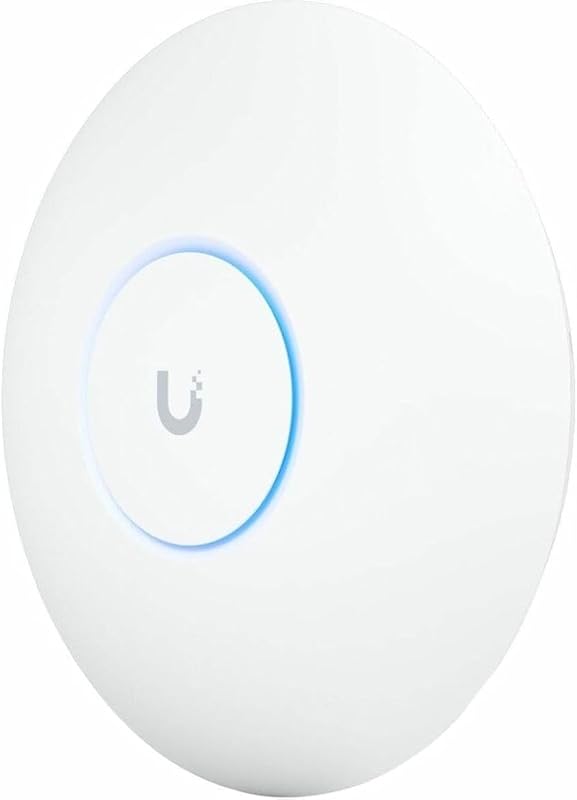
The Ubiquiti Networks UniFi 7 Pro is a ceiling-mounted wireless access point built for demanding, large-scale enterprise environments where interference-free connectivity is paramount. Operating on UniFi OS with WPA2 security protocols, this unit utilizes Wi-Fi 7 with 6 spatial streams and dedicated 6 GHz support. The listing specifies a single network port, dual-band frequency management, internal antennas, touch control capability, and a data transfer rate reaching up to 5.7 gigabytes per second to serve personal computers concurrently.
A crucial detail specified in the listing title and description is that the PoE+ power adapter is not included in the box. To operate the UniFi 7 Pro, installers must provide power through an external 802.3at-compliant source over the incoming network cable. Running on 802.11ax and advanced Wi-Fi 7 wireless standards, the access point is engineered to manage dense client environments without wireless congestion.
This model is ideal for corporate facilities and busy commercial layouts looking to harness modern Wi-Fi 7 speeds. Because it relies entirely on an external power delivery source, pairing the access point with a compatible PoE+ switch or dedicated high-speed injector is mandatory. Users with older passive 24V or standard 15W injectors will need to upgrade their power supplies to ensure this unit functions properly.
Ubiquiti Networks PoE 48V 0.5A GigEthernet
The Ubiquiti Networks PoE 48V 0.5A GigEthernet adapter, bearing model designation POE-48-24W-G, delivers 48 volts of direct current at 0.5 amps across category cabling. A key feature of this inline power unit is its RJ45 shielded socket, which provides an earth ground connection to protect connected electronics against electrical damage. The listing documents rigorous external testing certifications, including IEC 60950-1:2005+A1, UL60950-1, EN55022:2010, EN55024:2010, and FCC Class B verification, ensuring strict adherence to commercial safety standards.
This adapter converts incoming utility power into steady, regulated 48V direct current to support compatible gigabit endpoints. While the product listing mentions retail packaging attributes like single-use classification and battery specifications, the core device functions as a durable AC-to-DC power supply. Its shielded RJ45 interface prevents electrostatic discharge from traveling down network lines into sensitive networking gear, making it especially effective when terminating cables from exterior building sectors.
Deploying this model is the logical choice when powering stationary gigabit terminals or outdoor-rated appliances where electrical surge suppression and physical shielding are mandatory. It serves reliably when installing devices like remote access terminals or an auxiliary unifi doorbell camera across shielded Ethernet runs. However, if your target hardware requires multi-gigabit throughput rates exceeding 1 Gbps, you should choose a dedicated 2.5 GbE adapter instead.
Ubiquiti Networks 2.5GbE 30W PoE+ Adapter

Best for: Next-generation multi-gigabit access points
Pros
- High-speed 2.5 GbE throughput
- 30W PoE+ power output
- Integrated surge and clamping protection
Cons
- Single-device power injection
- Plastic chassis operating range limits
The Ubiquiti Networks 2.5GbE 30W PoE+ Adapter, model UACC-PoE+-2.5G, is an inline power supply developed to support multi-gigabit throughput while delivering up to 30 watts of PoE+ power. Built with Gigabit LAN port technology that scales up to 2.5 GbE, this adapter allows high-capacity devices to transfer data without being throttled by legacy 1 Gbps limits. It is constructed to operate in ambient temperatures from 32 to 104 degrees Fahrenheit and humidity levels between 10 and 95 percent.
Reliability and hardware protection are central to this design, which features integrated surge and clamping protection to safeguard connected devices against voltage spikes and power fluctuations. The unit supports a wide input voltage span from 100 to 240 volts AC and connects via an RJ45 shielded socket for Data In and PoE output. According to the manufacturer listing, this adapter is explicitly compatible with UniFi endpoints including the U7-Pro, U7-Outdoor, U7-Pro-Max, U7-Pro-Wall, U7-IW, U7-Lite, and U6-Enterprise.
This Ubiquiti 2.5GbE 30W PoE+ Adapter is the top choice for network architects integrating next-generation access points into an existing network without replacing non-PoE gigabit switches. It reduces dependency on expensive multi-gigabit PoE switch ports by injecting up to 30 watts directly at the device drop. However, if your deployment involves powering clusters of multiple access points in a single location, running individual injectors may create clutter compared to a dedicated multi-port switch.
Ubiquiti Compact 5-Port Gigabit Switch
Best for: Flexible desktop workgroup switching
Pros
- Powered by PoE or USB-C
- Five gigabit RJ45 network ports
- Centralized configuration management
Cons
- Non-metal lightweight plastic chassis
- Requires external power input to operate
The Ubiquiti Compact 5-Port Gigabit Switch is an agile Layer 2 desktop unit designed to expand wired connectivity across localized workgroups. Built with a compact desktop footprint in a plastic case, the switch can be powered either through upstream 802.3af/at PoE on its network interface or via an external USB Type-C connection. It has an energy-efficient architecture with a maximum power draw of 30 watts, an upper operating temperature rating of 40 degrees Celsius, and operates on standard 220-volt input power supplies.
Management options on this switch are extensive, offering centralized configuration management, configuration cloning, and Auto-MDIX automatic cable adjustment for straight-through or crossover lines. Administrators can manage operation modes such as per-port switching or port mirroring, configure network and VLAN settings, implement jumbo frame and flow control services, and apply storm control parameters per port. While the listing notes a data transfer rate specification of 7.44 megabits per second alongside its gigabit switching parameters, the unit provides complete Layer 2 switching capabilities across its five RJ45 ports.
This Ubiquiti Compact 5-Port Gigabit Switch is ideal for office desks, lab benches, and media centers where several wired devices need to share a single Ethernet drop. When connected to a central ubiquiti 16 port poe switch, it draws power directly from the incoming Ethernet cable, eliminating the need for an AC power brick. While ideal for edge distribution, larger network backbones requiring dozens of ports or direct optical uplinks will need a full-sized rack switch.
Ubiquiti Networks UniFi USW-24 Switch
The Ubiquiti Networks UniFi USW-24 Switch is a 24-port managed Layer 2 rackmount switch housed in a black metal enclosure weighing 3 kilograms. It provides 24 Gigabit Ethernet RJ45 ports alongside 2 dedicated 1G SFP slots for fiber-optic uplinks, operating across a Linux-based platform with an aggregate data transfer rate of 24000 megabits per second. The switch is engineered for high-density rack environments, operating on 220-volt supplies with an upper temperature tolerance of 40 degrees Celsius.
The product description explicitly designates this model as a 24-port non-PoE Ubiquiti switch. This means that while it provides robust Layer 2 data switching, port isolation, and fiber aggregation across 24 wired connections, it does not supply inline electrical power over Ethernet to connected devices. Operating as a full-fledged ubiquiti managed switch, this Ubiquiti Networks UniFi USW-24 Switch excels at interconnecting wired workstations, network-attached storage units, and print servers across a commercial facility.
This switch is the right solution for corporate server racks and network closets requiring dependable wired port density without the added thermal load of internal PoE power supplies. Because the USW-24 does not provide inline power, administrators deploying PoE-powered access points or cameras must incorporate standalone injectors on those specific lines. If your installation requires all 24 ports to deliver integrated power directly from the chassis, you should consider a dedicated ubiquiti 48 port poe switch or similar high-capacity powered alternatives.
Matching a Model to Your Setup
- Deploying Wi-Fi 7 hardware without a PoE+ switch: Pair the Ubiquiti Networks UniFi 7 Pro with the Ubiquiti Networks 2.5GbE 30W PoE+ Adapter to unlock multi-gigabit throughput and 30-watt power delivery over a single cable drop.
- Expanding wired workstations from a single wall jack: Use the Ubiquiti Compact 5-Port Gigabit Switch, powering it directly via upstream PoE or USB Type-C to connect multiple desktop computers without clutter.
- Building a central server rack for wired infrastructure: Install the Ubiquiti Networks UniFi USW-24 Switch to handle high-density Layer 2 data switching and fiber aggregation across 24 gigabit ports.
- Supplying standard 48V power to an isolated legacy access point: Deploy the Ubiquiti Networks PoE Injector to feed reliable 24-watt power to a single remote device without replacing non-PoE network gear.
- Running network lines through high-interference or exterior environments: Choose the Ubiquiti Networks PoE 48V 0.5A GigEthernet for its shielded RJ45 grounding socket and compliance with international safety certifications.
Before You Buy
Before purchasing hardware from this lineup, it is critical to verify the precise power delivery and cabling requirements of your network endpoints. The product listings do not include Ethernet patch cables, and certain units omit power supplies entirely; most notably, the UniFi 7 Pro listing explicitly states that no PoE+ adapter is included in the box. Furthermore, the USW-24 switch is strictly a non-PoE unit, meaning it will not power connected access points or VoIP phones without supplemental inline injectors placed along the data run.
Additionally, the listings do not specify exact physical bracket dimensions, wall-mounting screw kits, or supplementary USB-C power bricks for the compact 5-port switch. Buyers should also note differences in interface speeds, as standard gigabit injectors will bottleneck multi-gigabit endpoints like modern Wi-Fi 7 access points. Carefully check the required voltage, operating wattage, and bandwidth expectations of your hardware to ensure your chosen switches and injectors deliver seamless compatibility.
FAQ
Can the Ubiquiti Networks UniFi USW-24 Switch power access points directly?
No. The product listing explicitly clarifies that the USW-24 is a non-PoE switch. To connect and run PoE-powered hardware such as access points or cameras through this switch, you must connect a standalone inline injector, such as the 2.5GbE 30W PoE+ Adapter, between the switch port and the endpoint device.
Does the Ubiquiti Networks UniFi 7 Pro include a power adapter?
No. The listing explicitly states that the PoE+ adapter is not included with the UniFi 7 Pro. You will need to supply power using an external 802.3at-compliant PoE+ injector or an upstream PoE+ switch port capable of delivering sufficient wattage.
How can the Ubiquiti Compact 5-Port Gigabit Switch be powered?
The compact 5-port switch features dual power flexibility, supporting input power via upstream 802.3af/at PoE through its network interface or through a standard 5V USB Type-C connection, allowing deployment without a dedicated AC wall outlet.
What makes a shielded PoE adapter important for network installations?
Adapters with shielded RJ45 sockets, such as the POE-48-24W-G, provide physical grounding paths that protect connected devices against electrostatic discharge and power surges, which is especially vital when connecting outdoor or long-run network cables.
Why is a 2.5 GbE PoE adapter preferred over a standard gigabit injector for Wi-Fi 7?
Modern Wi-Fi 7 access points can process multi-gigabit wireless traffic that exceeds 1000 megabits per second. A standard gigabit injector caps the wired backhaul at 1 Gbps, whereas a 2.5 GbE PoE+ adapter maintains higher data transfer rates while providing up to 30 watts of power.


